The Sacred Journey: HAJJ
Step onto the path of pure devotion as outlined in the Noble Quran and authentic Prophetic Sunnah. Explore our meticulously designed timeline, live-interactive geographic map, and jurisprudential breakdowns of the major pilgrimage.
Virtues of the Blessed Hajj
Authentic Foundations & Scriptural Promises
The Proclamation to Mankind
وَأَذِّن فِي النَّاسِ بِالْحَجِّ يَأْتُوكَ رِجَالًا وَعَلَىٰ كُلِّ ضَامِرٍ يَأْتِينَ مِن كُلِّ فَجٍّ عَمِيقٍ
"And proclaim to the people the Hajj [pilgrimage]; they will come to you on foot and on every lean camel; they will come from every distant pass." — Surah Al-Hajj [22:27]
Returning as on the Day of Birth
مَنْ حَجَّ لِلَّهِ فَلَمْ يَرْفُثْ وَلَمْ يَفْسُقْ رَجَعَ كَيَوْمِ وَلَدَتْهُ أُمُّهُ
Abu Hurairah (may Allah be pleased with him) narrated: "The Messenger of Allah ﷺ said: 'Whoever performs Hajj for Allah's sake and does not have sexual relations with his wife, and does not commit sins or dispute, will return (sinless) as if he were born on that very day.'"
Nothing Less than Paradise
وَالْحَجُّ الْمَبْرُورُ لَيْسَ لَهُ جَزَاءٌ إِلاَّ الْجَنَّةُ
Allah's Messenger ﷺ said: "An Umrah to another Umrah is an expiation for the sins committed between them, and the reward for an accepted Hajj (Hajj Mabrur) is nothing but Paradise."
Sacred Geography of Hajj
Interactive Path Connecting the Ritual Sites
Day-by-Day Hajj Rituals
Follow the complete steps derived from the Prophet's ﷺ Farewell Pilgrimage
Assuming Ihram & Arriving in Mina
Deconstructed Stage 1: The Foundations of Ihram
On the 8th of Dhul-Hijjah (known as Yawm at-Tarwiyah), pilgrims transition completely from their global configurations to enter the intense physical borders of the major Hajj pilgrimage.
Ghusl & Physical Purification
Perform a ritual purification bath (Ghusl), trim nails, mustache, and remove unwanted hair. This aligns with fitrah hygiene before adopting the unstitched bounds of Ihram.
Adopting the Ihram Garments
Men don two clean, white, unstitched sheets (Izar and Rida) leaving the head completely uncovered. Women dress in broad, non-revealing clothing of any color, leaving only their hands and face visible.
Stating Niyyah (Formulating the Intention)
Express the intention for Hajj audibly at your point of residence within Makkah. Once stated, the ultimate restrictive laws of Ihram (no scent, no hunting, no shaving) apply immediately.
Chanting the Talbiyah Loudly
Initiate the loud, resonant recitation of the Talbiyah continuously during your transition to Mina, affirming submission and absolute monotheism.
Encampment & Five Prayers in Mina
Arrive in the valley of Mina. Stay overnight and pray Dhuhr, Asr, Maghrib, Isha, and the next day's Fajr shortened to 2 rak'ahs (Qasr) but in their correct, un-combined timings.
لَبَّيْكَ اللَّهُمَّ حَجًّا

The Stand on Mount Arafat
Deconstructed Stage 2: The Stand of Wuquf
Standing on the plains of Arafah is the absolute pinnacle, without which Hajj becomes entirely void. Our Prophet ﷺ emphasized: "Hajj is Arafah."
Transit from Mina to Arafah
Depart from Mina after performing Fajr on the 9th day of Dhul-Hijjah. Proceed towards the plains of Arafah, reciting Talbiyah and Takbeer aloud.
The Khutbah & Combined Prayers
Listen to the solemn sermon of Hajj delivered at Masjid-e-Namirah (if accessible), then combine Dhuhr and Asr prayers shortened to 2 rak'ahs each, performed with one Adhan and two Iqamahs.
Wuquf (The Stand of Sincere Devotion)
Spend the critical period from noon until the moment the sun sets facing the Qiblah, raising both hands to seek absolute forgiveness from Allah.
لَا إِلَهِ إِلَّا اللَّهُ وَحْدَهُ لَا شَرِيكَ لَهُ، لَهُ الْمُلْكُ وَلَهُ الْحَمْدُ، وَهُوَ عَلَى كُلِّ شَيْءٍ قَدِيرٌ

The Night Journey to Muzdalifah
Deconstructed Stage 3: Overnighting at Muzdalifah
After the sun sets on the 9th of Dhul-Hijjah, pilgrims depart from Arafah to travel immediately to the open plains of Muzdalifah.
Postponed Maghrib & Isha Prayers
Delay Maghrib prayer until reaching Muzdalifah. Upon arrival, combine Maghrib (3 Rak'ahs) and Isha (shortened to 2 Rak'ahs) with one call to prayer and two Iqamahs.
Sleeping Under the Open Sky
Rest completely without engaging in optional night prayers. The Prophet ﷺ slept until the break of dawn, indicating that resting here is an obligatory sunnah.
Collecting Pebbles (Al-Hasa)
Gather 7 small pebbles (the size of a chickpea) from Muzdalifah to prepare for the stoning of Jamarat al-Aqabah on Eid morning.
Jamarat Pelting, Sacrifice & Haircut
Deconstructed Stage 4: Yawm-an-Nahr (Day of Sacrifice)
On the 10th of Dhul-Hijjah (the Day of Eid), pilgrims complete four essential acts sequentially following the Sunnah of the Prophet ﷺ to conclude the major phase of Hajj.
Stoning Jamarat al-Aqabah (Ramy)
Pelt Jamarat al-Aqabah (the largest pillar) with seven consecutive small pebbles. Raise your right hand with each throw, say "Allahu Akbar", and cease reciting the Talbiyah immediately after the first stone.
Offering the Sacrifice (Nahr)
For those performing Tamattu' or Qiran Hajj, a sacrificial animal (sheep, goat, or a share in a camel/cow) must be slaughtered. You can authorize reliable local agencies or online platforms (such as Adahi) to distribute the meat to the poor in Makkah.
Shaving or Trimming the Hair (Halq or Taqsir)
Men must either shave their heads completely (highly preferred, receiving threefold prayers of mercy from the Prophet ﷺ) or cut their hair evenly. Women trim only a fingertip's length from all ends of their hair locks.
First Tahalul (Minor Release)
Once any two of the three main rites are done (Stoning, Shaving/Trimming, or Tawaf al-Ifadah), you enter the state of minor Tahalul. You can take off the Ihram, wear normal clothing, and use perfume. All Ihram prohibitions are lifted except marital relations.
اللَّهُ أَكْبَرُ
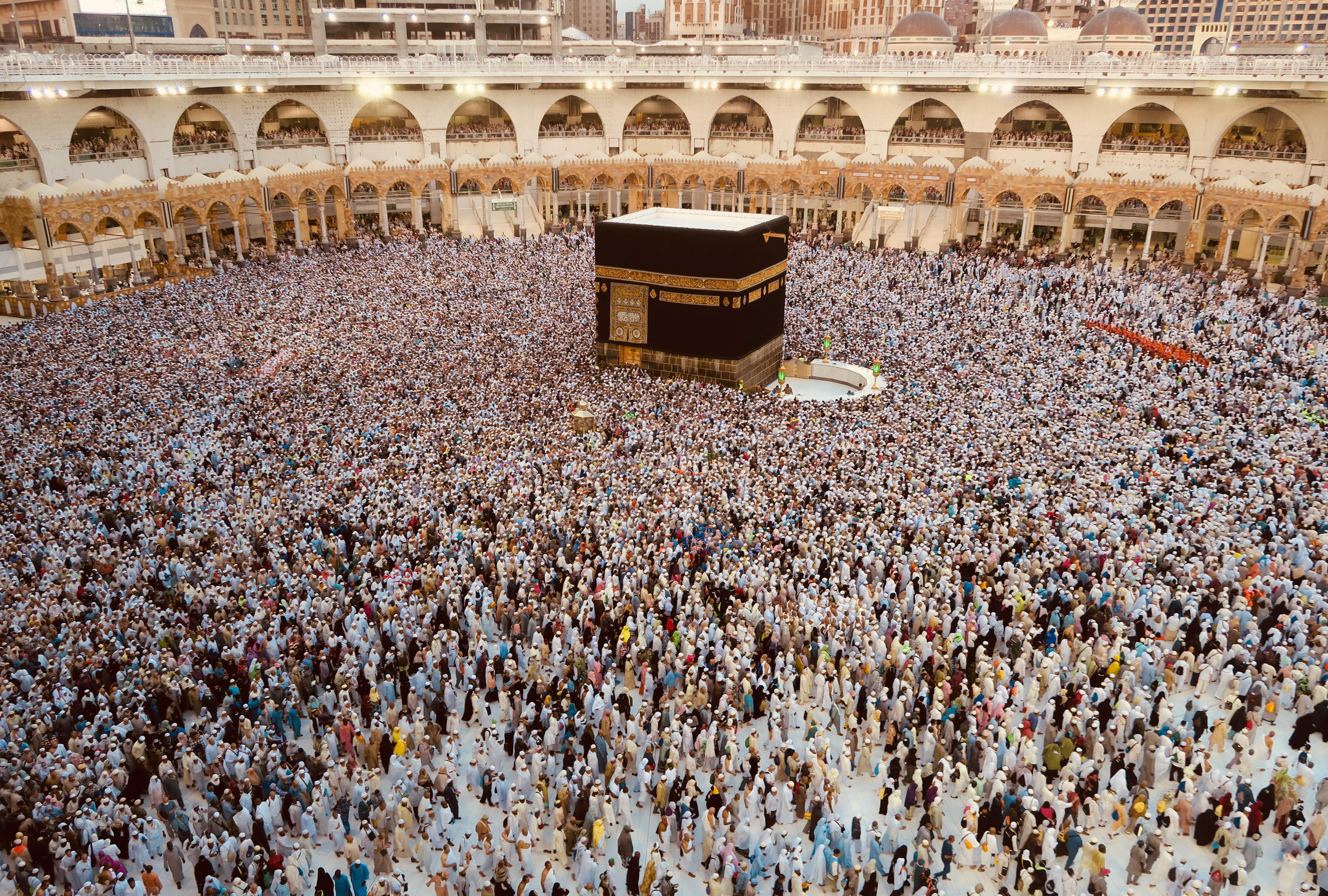
Tawaf al-Ifadah & Days of Tashreeq
Deconstructed Stage 5: Tawaf al-Ifadah & Tashreeq
This phase shifts the pilgrimage from the intense personal isolation of Mina and Arafat back into the grand communal workspace of Al-Masjid Al-Haram, followed by a transition back into the historic valley of Mina for the final stone throwings. It completes the ultimate release from Ihram constraints.
Tawaf al-Ifadah (The Core Pillar)
Pilgrims return to the Holy Kaaba to perform seven circumambulations (Tawaf al-Ifadah). Unlike the initial Tawaf, there is no jogging (Raml) or bare shoulder (Idtiba') required. This is an indispensable pillar of Hajj.
Sa'ee of Hajj (Safa & Marwa)
Pilgrims perform the seven walks between Mount Safa and Mount Marwa. Note: This Sa'ee is mandatory for those performing Tamattu' Hajj, and for those performing Qiran/Ifrad who did not perform it earlier during their Arrival Tawaf.
Mina Encampment (Days of Tashreeq)
Immediately after completing the Ifadah rituals, pilgrims travel back to Mina. Spending the nights of the 11th, 12th, and optionally the 13th of Dhul-Hijjah inside the boundaries of Mina is an obligatory duty.
Sequential Stoning (Post-Zawal)
Every afternoon during the Days of Tashreeq, once the sun passes its peak (Zawal), you must pelt all three pillars with seven pebbles each. You must respect the strict Sunnah sequence:
Departure Option (Nafir al-Awwal)
If you wish to leave Mina on the 12th of Dhul-Hijjah after stoning, you must walk completely outside Mina's boundaries before sunset. If sunset catches you inside Mina, you must remain and stone on the 13th day, which represents the complete, highly-rewarded Sunnah.

Tawaf al-Wada' (The Farewell)
Deconstructed Stage 6: The Farewell Separation
Before departing from Makkah to return to your homeland, your final action must be performing the Farewell Circumambulation (Tawaf al-Wada') around the Holy Kaaba.
Completing All Personal Transactions
Finish all packing, purchasing of souvenirs, and administrative steps prior to setting out for the Masjid. The Tawaf al-Wada' must be your absolute final physical action inside Makkah.
Performing the Seven Rounds
Circumambulate the Holy Kaaba seven times counter-clockwise. Note: Men do not perform Idtiba' (uncovering the right shoulder) or Raml (jogging) during this farewell circumambulation.
Departing Immediately
Exit the Masjid and Makkah boundaries immediately after praying the two rak'ahs of Tawaf. Lingering or engaging in secondary affairs voids the immediacy of the farewell.
Pillars (Arkan) vs Obligations (Wajibah)
Scholarly definitions of errors and omissions during Hajj
To guarantee the validity of your Hajj, it is critical to know how modern scholars categorize each action. If you miss a pillar, your Hajj is void; if you miss an obligation, you can compensate for it with a sacrifice (Dam).
4 Pillars of Hajj (Arkan)
Hajj is void without these; sacrifice cannot make up for their omission:
- Ihram: Making the intention to begin Hajj
- Wuquf at-Arafah: Standing in Arafat on the 9th
- Tawaf al-Ifadah: Main circumambulation around the Kaaba
- Sa'ee: The walk between Safa and Marwa
7 Obligations of Hajj (Wajib)
Leaving any of these requires a sacrificial sheep penalty in Makkah:
- Assuming Ihram at the appointed Meeqat boundary
- Standing on Arafat during the day until sunset
- Staying overnight in Muzdalifah on Eid night
- Staying overnight in Mina during Tashreeq days
- Pelt the three Jamarats in order
- Shaving or cutting the hair
- Performing Farewell Tawaf (Tawaf al-Wada')